The challenge
The convergence of understanding of our genes and the power of technology is an area we are witnessing exponential leaps. People can now access, understand and benefit from the endlessly exciting and diverse things about our genetics.
This opens up the opportunity to improve people’s health by proactively warning them of possible health risks based on their genetic insights. Combined with the advances in wearables, we can now get real-time health data from our smartwatches.
TLDR, to design an ultra personalised health service app which leverages user’s genetic data and real-time health data provided by one’s smartwatch.
Understanding the space
I started off by looking at research papers with keywords such as fitness, diseases and genetics. I also took a look at the working population and gathered an understanding how the Indian population use their phones and smartwatches.
From here, I would go to talk to professionals in the field of genetics to understand the space that I will be working on and the potential it has. Finally, I did a user survey study to understand from a sample space how they currently use these gadgets in a daily basis.
Summarising facts
Non-communicable diseases These can be easily prevented if diagnosed at the right time.
Lack of concern Generally people only start considering about their health after they hit their 30s.
The WFH culture This culture has made the situation worse as people are physically inactive.
Growing market of smartphones 4 in 5 people in India will have smartphones by the year 2025, in a report by Statista.
Heart-related diseases 17 lakhs Indian deaths are caused by heart-related diseases every year, according to the World Health Organisation.
Diabetic population 1 in 6 people in the world with diabetes is from India. This may be due to environmental and lifestyle choices.
The rise of Direct to Consumer (D2C) Testing
D2C kits have been steadily getting traction in the last decade. Companies like 23andMe and DNAKit provide various information about a person just from their saliva sample.
These kits can assess a vast set of genetic variations. It can also gather information like:
Genetic disorders

Hereditary diseases

Body metabolism
Athletic performance
Circadian rhythm

The world of fitness wearables
While wearables are becoming more mainstream, lately, whether these devices help improve health and fitness has been asked around. A study published in the Journal of the American Medical Association found that fitness trackers worn by participants were “less effective at encouraging people to lose weight than simply following a diet and exercise plan”.
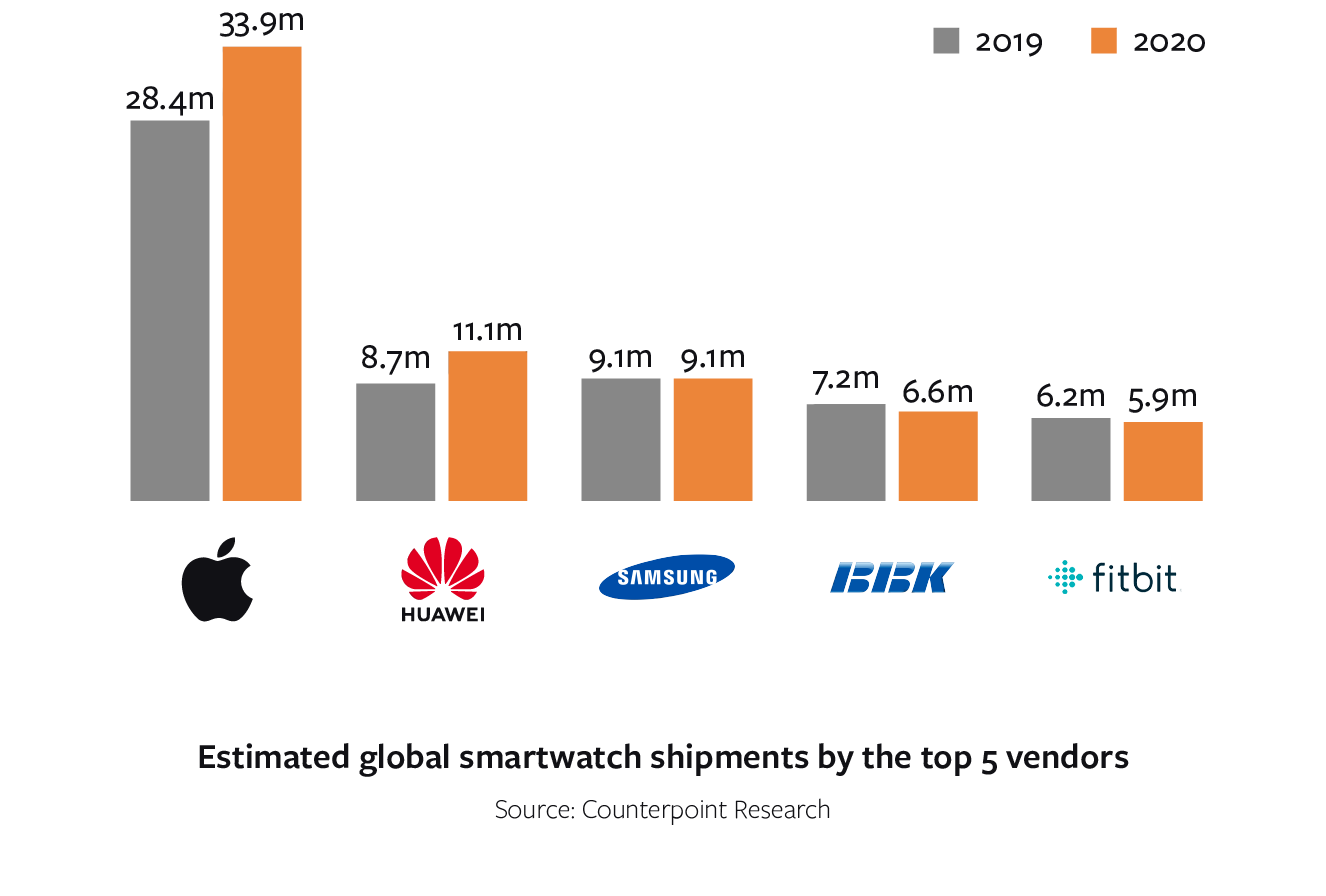
The theory put forward by researchers was that people became too reliant on the device to change their health compared to those in the study, which monitored their exercise and diet themselves and were self-motivated.
Some of the data which can be collected from the users include:
Screen time

Blood oxygen levels

Sleep cycles

Heart rate
Body temperature

Deeper understanding through interviews
I also had the opportunity to contact two professors who work in the field of Biotechnology and Forensics. These were contacts I got through through connections from my father’s peers. I sat down on a call with them for almost 45 minutes. The goal of this interview was to gain a deeper understanding of the space and look at opportunities that I may have missed out on from my literature review.

Dr Rajaguru Aradhya
Assistant professor
School of Biotechnology
Amrita Vishwa Vidyapeetham, Kerala

Dr Sally Lukose
Former professor
Forensic science
Galgotias University, Greater Noida
They gave me a lot more insight into how genetic testing works, D2C testing and its implications.
Many hospitals lack the facilities for genetic testing. They rely on third-party labs to provide the results for their patients.
DNA testing is a relatively complicated and niche domain. The results might be complex for the everyday user to understand.
Samples collected for testing are susceptible and can be misused in the wrong hands. Trust is an essential factor here.
Genetics is associated with family history, and any diagnosis can lead to conflict or paranoia amongst family members.
Survey
I floated a survey to understand how people perceive fitness and their understanding of genetics. The data was acquired from various age groups to make it more diverse. All of the participants were between the ages of 18 and 50.


Inference
The rise in use of wearables From my initial study, I understood that there’s a rise in the use of wearables. This is proven by the fact that more than half of the participants use wearables. This shows the potential of the technology and gives us a nudge to make it better.
Price being an entry barrier and niche domain. More than 75% of the participants said that price is one of the most deciding factors when buying a wearable. Incentives to get into this technology and provide services worth that price would be a good bargain for gaining more share.
Natural and personalised onboarding There is a massive polarity between the participants when asked whether they would share their genetic data to get a health plan. The onboarding should be natural and convincing enough to get their interest.
Call for privacy and data security More than 60% of the participants felt unsafe while sharing their genetic data with 3rd party laboratories. A more transparent process and ensuring the users that their data is secure is an important step.
Our competition
23andMe
23andMe was founded in 2006 and was one of the firsts to begin offering autosomal DNA testing for ancestry. As of 2021, they operate in the US, UK and Canada. Their name is derived from the fact that there are 23 pairs of chromosomes in a human cell.
How it works
- Order They send out a saliva collection kit with written instructions on how to properly collect a sample.
- Register After receiving the kit, you have to register it on their website with the barcode to identify it as yours.
- Discover In 3-4 weeks, they would analyse the sample in their in-house lab, and you can check out your reports by logging into your account.
Features
• Includes characteristics, family ancestry reports, and fundamental genetic anomalies. • Athletic performance and general lifestyle analysis. • Can predict if there is an underlying gene that might cause issues in the future. • Can cross-check within their database to identify people who share DNA with you. • They don’t allow its genetic profiles to be used by law enforcement, as they believe that it violates users’ privacy.
Goals
Health and lifestyle To help the user make informed decisions about their health and bring about a change in their lifestyle with the help of GeneFit.
Preliminary diagnosis To warn the users about any pre-existing conditions they might have and connect them with the relevant professionals.
Privacy and security To be privacy-first, as DNA is sensitive data to handle, it must be taken care of in a delicate manner.
Challenges
Connecting real-time data with genetics The integration with the smartwatch and information from the genetics report is something that can take many forms. I intend to provide the user with clear and concise information.
Bridging healthcare and lifestyle DNA testing can be an eye-opener for underlying genetic conditions, and I want my users to be informed about it. Genefit can tie along with various hospitals, bringing about a business angle as well.
Personalising health plans and gamification Change is difficult to bring about, and I want my users to take a positive attitude towards life after their tests. I encourage this by gamification of everyday challenges and providing them with perks when they complete specific tasks.
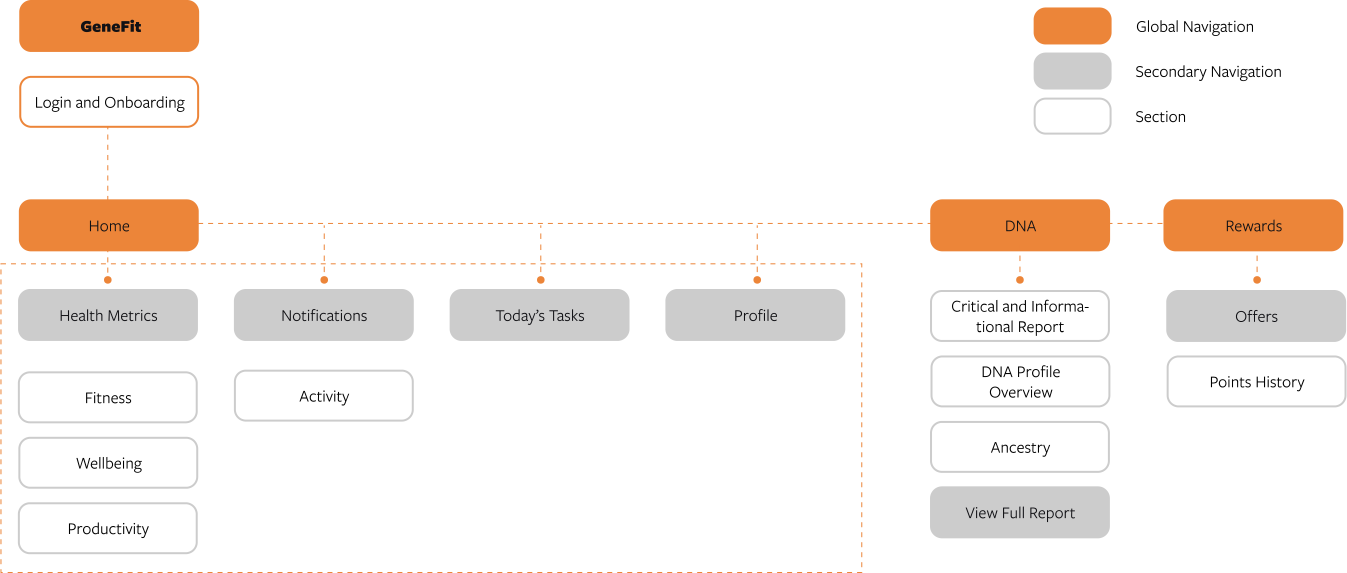
Information architecture
Final designs
Sign Up and Onboarding
Malvika installs GeneFit on her iPhone, and she's taken to the sign-up page. Upon logging in, she was asked for her permission to access Apple Health, actively populating GeneFit with Apple Watch data. The Basic Health Info is pre-filled and is re-verified.The Privacy page, in a gist, shows how GeneFit takes care of her genetic data giving her assurance. Finally, she is brought to the screen to order her kit.
Personalisation
As soon as Malvika is done with the onboarding, she is asked a few personal questions to customise GeneFit's daily task suggestions to curb her fitness. It also asks for her allergies and workout patterns to determine a tailor-made fitness routine.Homescreen
As she reaches her home screen, Malvika is presented with an abundance of information regarding her health.
The orange Critical alert calls the Malvika's attention, as it is a crucial detail received through her DNA test, which she should take action soon.
Below, she is presented with the daily tasks to earn DNA points, which can be used further on the Rewards page to access offers.
DNA
As Malvika opens the DNA tab, she is provided with the key insights from her report.
Again, the orange Critical alert calls the Malvika's attention, urging her to take action against the risk of Melanoma.
BelowBelow, other alerts which may not need immediate action are laid out. Her body profile contains details that should help her in her day to day activities.
Finally, a breakdown of her ancestry is also shown with a button to take her to the complete report.
The screen shown here is interactive;
you may scroll to see the rest of the content.
Other QoL features
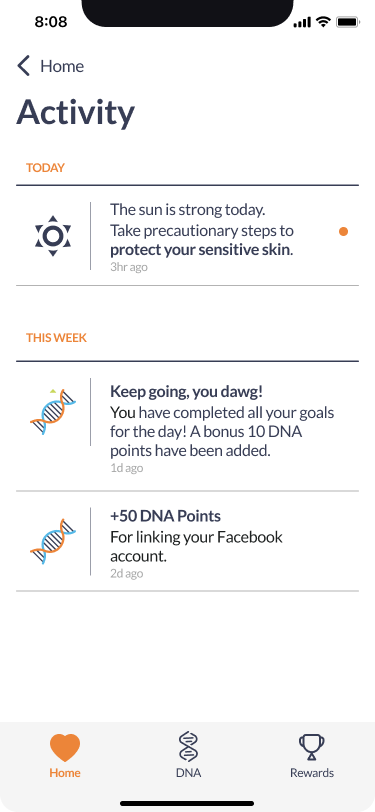 The Activity page shows recent notification which you’ve received through the app.
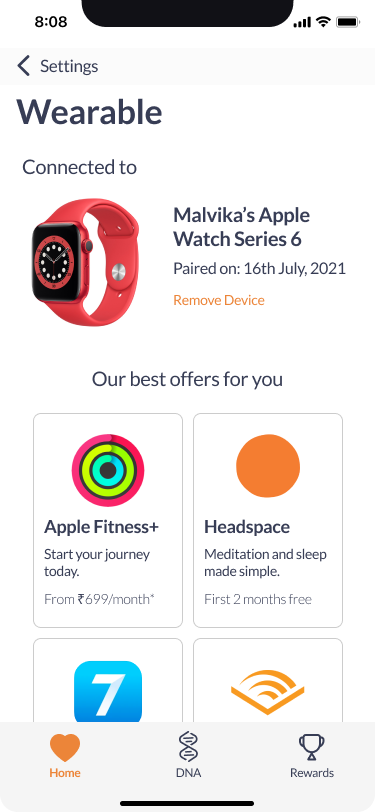 The Wearable section shows brief information on what device you have paired and offers some applications you can use alongside your wearable.
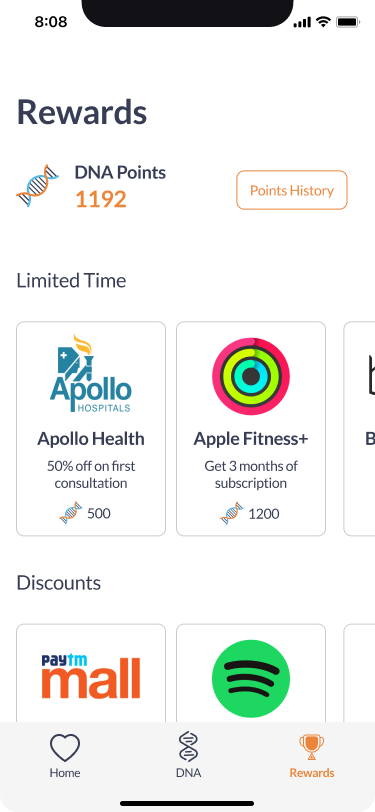 The Rewards section shows one’s accumulated DNA points which one can use to redeem specific discounts on products and services
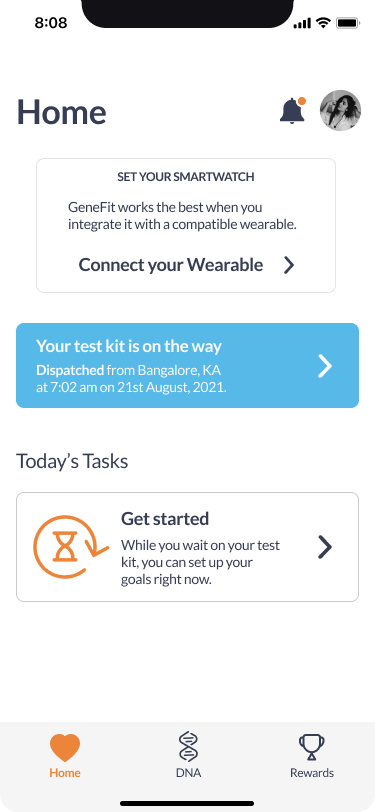 When the user skips the onboarding process, they are taken to this barebones homepage.